Serbian economic development must not be based exclusively on the concept of cheap labour, but on decent work, productivity and keeping qualified workers and young people in the country. That is why earning a salary one can live on, while also remaining motivating, is one of the key economic and social issues directly affecting citizens’ living standard, workers’ position, and future economic growth. In order to come up with sustainable solutions regarding salaries and protection of employees’ living standard, it is necessary for social partners, academic community and institutions to continue social dialogue.
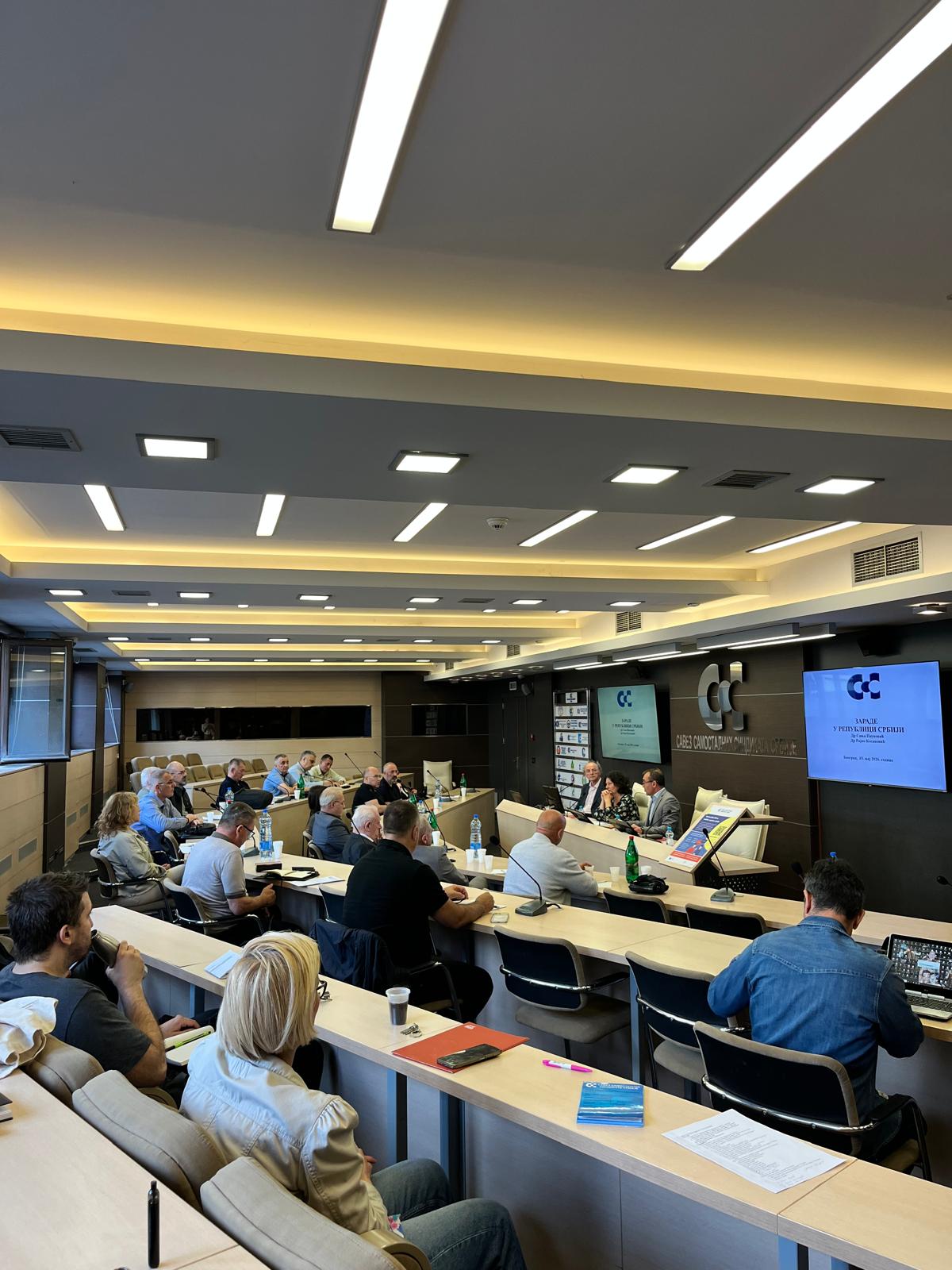
This was the conclusion of the round table „Salaries in Serbia – State, Trends and Expectations,’’ which has been organized on May 15 by the Confederation of Autonomous Trade Unions of Serbia. According to the CATUS Council Secretary Slađan Bobić, discussion should not focus solely on economic indicators, percentages and statistics but also people’s lives – whether they can live off their work, pay for rent, food, transport and their children’s education, plan the future or merely survive from one month to the next.
„There is an increasing number of workers earning wages close to the minimum wage. The differences between expertise levels, responsibility, and complexity of work are becoming increasingly smaller. Workers with a lengthy experience, qualifications and responsible jobs often receive salaries only slightly above the minimumm wage“, Bobić has said, and added it was not only an economic issue, but a social one, as well.
„When the salary structure is undermined, workers’ motivation declines, the value of knowledge and experience is lost, young people’s interest in certain professions weakens, dissatisfaction grows, and more people decide to leave the country. ’’
As he explained, minimum wage must provide for decent life, and other salaries should rise, as well. That is why it is necessary to strengthen collective bargaining, regulate the coefficient system, secure a fairer distribution of the productivity growth, reduce pressure on the lowest wages and create conditions in which work would be valued in a fair and dignified manner, concluded Bobić, and announced that the CATUS would continue fighting for workers to be satisfied because there can be no successful economy without satisfied workers.
This was the conclusion of the round table „Salaries in Serbia – State, Trends and Expectations,’’ which has been organized on May 15 by the Confederation of Autonomous Trade Unions of Serbia. According to the CATUS Council Secretary Slađan Bobić, discussion should not focus solely on economic indicators, percentages and statistics but also people’s lives – whether they can live off their work, pay for rent, food, transport and their children’s education, plan the future or merely survive from one month to the next.
„There is an increasing number of workers earning wages close to the minimum wage. The differences between expertise levels, responsibility, and complexity of work are becoming increasingly smaller. Workers with a lengthy experience, qualifications and responsible jobs often receive salaries only slightly above the minimumm wage“, Bobić has said, and added it was not only an economic issue, but a social one, as well.
„When the salary structure is undermined, workers’ motivation declines, the value of knowledge and experience is lost, young people’s interest in certain professions weakens, dissatisfaction grows, and more people decide to leave the country. ’’
As he explained, minimum wage must provide for decent life, and other salaries should rise, as well. That is why it is necessary to strengthen collective bargaining, regulate the coefficient system, secure a fairer distribution of the productivity growth, reduce pressure on the lowest wages and create conditions in which work would be valued in a fair and dignified manner, concluded Bobić, and announced that the CATUS would continue fighting for workers to be satisfied because there can be no successful economy without satisfied workers.