Social housing in Austria, especially in Vienna, intended for people with low and middle incomes, is one of the world’s most successful models of affordable housing.
The construction of social housing units, financed through a one-percent contribution from every worker’s gross salary, resembles similar practices once implemented in our region, when employees in the former Yugoslavia collectively financed the construction of such apartments through contributions.
Unlike our former homeland, which no longer exists — and consequently neither does the collective financing of housing — Austria has continued developing social housing uninterruptedly from the end of the Second World War to the present day.
Given that the country has around 3.4 million employees, this system collects between three and four billion euros annually for these purposes. Thanks to these funds, one million social housing units have been built so far, providing homes for around three million people.
These statistics were presented by representatives of the Austrian Trade Union Federation (ÖGB), which plays a key — though often indirect — role in Austria’s social housing sector, primarily through advocating workers’ interests in affordable housing and through close cooperation with non-profit housing associations.
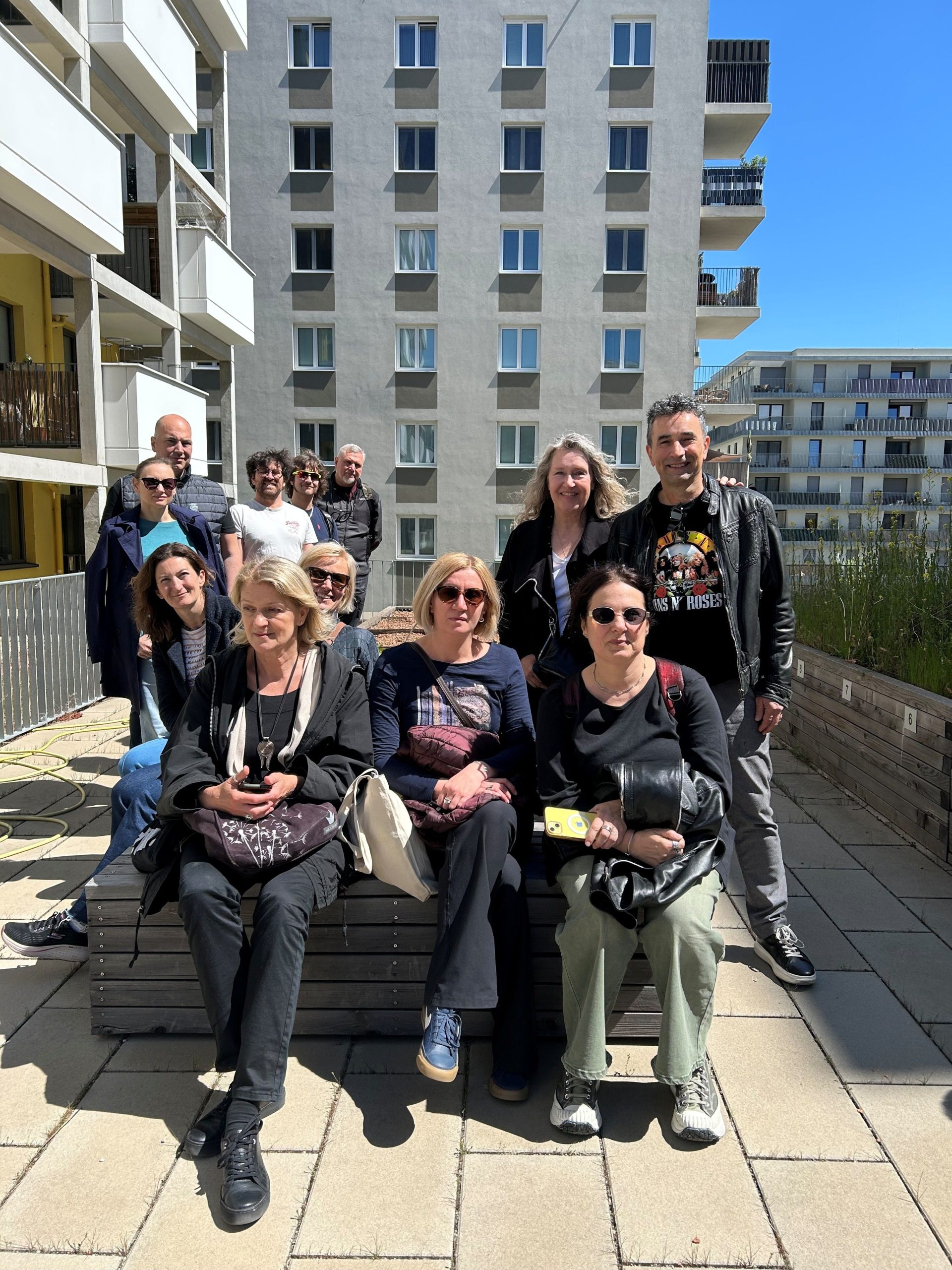
They emphasized to their trade union colleagues from the Confederation of Autonomous Trade Unions of Serbia and the Trade Union Confederation NEZAVISNOST that the project’s objective is to ensure safe and affordable housing for broad segments of the population, including the most vulnerable groups.
However, despite its long and successful tradition and a complex legal framework that had ensured employees’ funds were used exclusively for the construction of these apartments, following the adoption of a law in 2008, Austria’s federal provinces gained the authority to decide how the money would be spent.
In addition to the broad political consensus in Austria regarding the necessity of continuing social housing construction, the ÖGB advocates restoring the previous rule requiring these funds to be used solely for the construction of social housing. As they pointed out, this not only improves the population’s quality of life, but also enables the construction industry to achieve sustainable recovery at the same time.
Unlike the private market, social housing units have regulated price limits per square meter, making affordable housing accessible to a broad segment of the population.
With documentation proving a certain income level, a person residing in Austria and holding a residence permit becomes eligible to rent an apartment at prices significantly lower than market rates. There is, of course, a waiting list, with socially vulnerable individuals receiving priority.
Vienna is considered the world capital of social housing, with a tradition spanning more than 100 years. The city actively intervenes in the real estate market in order to prevent excessively high housing prices. Vienna’s housing fund purchases land intended for residential construction in order to prevent speculation and sharp increases in property prices, while strict investor tenders ensure a high standard of housing quality. Investors present their projects to the City, and an independent interdisciplinary commission evaluates each proposal in four categories: social sustainability, architecture, ecology, and economic efficiency. Each segment carries equal importance, and the investor whose project best fulfills all four criteria wins the tender and hires one of 185 companies to build social housing units.
The construction of social housing units, financed through a one-percent contribution from every worker’s gross salary, resembles similar practices once implemented in our region, when employees in the former Yugoslavia collectively financed the construction of such apartments through contributions.
Unlike our former homeland, which no longer exists — and consequently neither does the collective financing of housing — Austria has continued developing social housing uninterruptedly from the end of the Second World War to the present day.
Given that the country has around 3.4 million employees, this system collects between three and four billion euros annually for these purposes. Thanks to these funds, one million social housing units have been built so far, providing homes for around three million people.
These statistics were presented by representatives of the Austrian Trade Union Federation (ÖGB), which plays a key — though often indirect — role in Austria’s social housing sector, primarily through advocating workers’ interests in affordable housing and through close cooperation with non-profit housing associations.
They emphasized to their trade union colleagues from the Confederation of Autonomous Trade Unions of Serbia and the Trade Union Confederation NEZAVISNOST that the project’s objective is to ensure safe and affordable housing for broad segments of the population, including the most vulnerable groups.
However, despite its long and successful tradition and a complex legal framework that had ensured employees’ funds were used exclusively for the construction of these apartments, following the adoption of a law in 2008, Austria’s federal provinces gained the authority to decide how the money would be spent.
In addition to the broad political consensus in Austria regarding the necessity of continuing social housing construction, the ÖGB advocates restoring the previous rule requiring these funds to be used solely for the construction of social housing. As they pointed out, this not only improves the population’s quality of life, but also enables the construction industry to achieve sustainable recovery at the same time.
Unlike the private market, social housing units have regulated price limits per square meter, making affordable housing accessible to a broad segment of the population.
With documentation proving a certain income level, a person residing in Austria and holding a residence permit becomes eligible to rent an apartment at prices significantly lower than market rates. There is, of course, a waiting list, with socially vulnerable individuals receiving priority.
Vienna is considered the world capital of social housing, with a tradition spanning more than 100 years. The city actively intervenes in the real estate market in order to prevent excessively high housing prices. Vienna’s housing fund purchases land intended for residential construction in order to prevent speculation and sharp increases in property prices, while strict investor tenders ensure a high standard of housing quality. Investors present their projects to the City, and an independent interdisciplinary commission evaluates each proposal in four categories: social sustainability, architecture, ecology, and economic efficiency. Each segment carries equal importance, and the investor whose project best fulfills all four criteria wins the tender and hires one of 185 companies to build social housing units.